Tag: Marketing Strategy
Are You Monitoring Offline Media, Too?
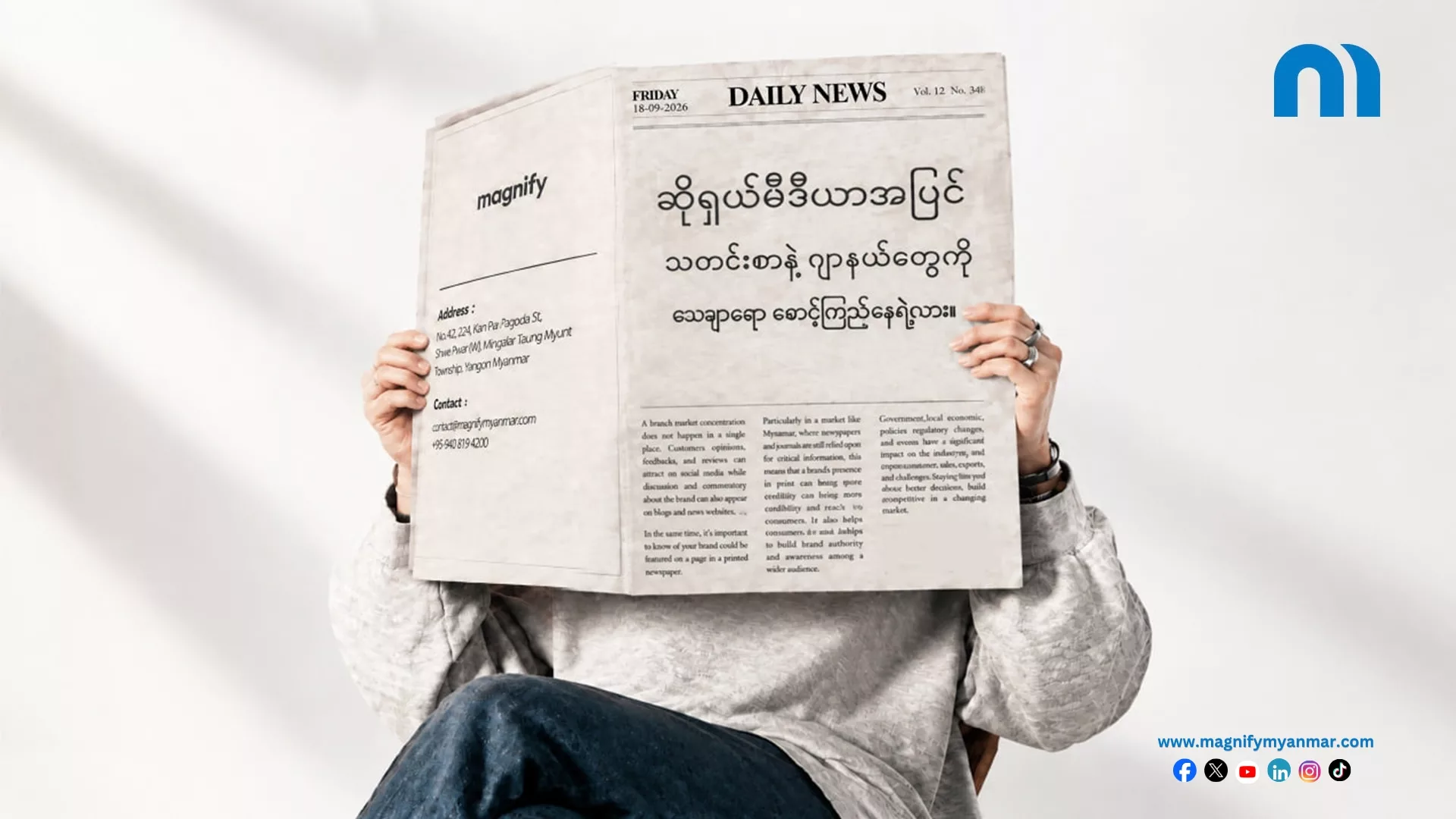
A brand’s market conversation doesn’t happen in just one place. Customers may share their opinions, experiences, and reviews on social media, while brand-related discussions can also appear on blogs and news websites. At the same time, an important mention of your brand could be featured somewhere in a newspaper or journal.
Especially in markets like Myanmar, where newspapers and journals are still used as sources of important information, official announcements, and business news, Offline Media Monitoring remains an important part of understanding the market.
Economic policies, regulatory changes, and industry developments that may impact your business can also be reported through newspapers and journals. Monitoring these offline sources helps brands identify important changes that could affect their business and industry in a timely manner.
It also allows you to discover how your brand is being mentioned in newspapers and journals, what your competitors are communicating, which campaigns they are running, and what important industry news and developments are emerging.
But is monitoring offline media really that easy?
Reading newspapers and journals one by one every day and searching for brand- or competitor-related information can be time-consuming. More importantly, important mentions can easily be overlooked.
With Magnify Myanmar, you don’t have to spend hours going through newspapers and journals individually. Starting from 9 AM, you can monitor relevant content from the morning’s newspapers and journals related to your Brand and Competitors all in one place.
Simply search for a brand name to find where and how it has been mentioned across newspapers and journals. This makes Offline Media Monitoring faster, easier, and more systematic.
Today, Social Listening is no longer just about listening to conversations on social media. It is about gaining a broader understanding of what people are saying about your brand across both online and offline media.
Instead of spending hours turning through newspapers and journals page by page, Magnify Myanmar’s One-Stop Media Monitoring service brings Online and Offline Media Monitoring together in one place.
Stay informed about your brand reputation, keep track of competitor activities, and identify important market and industry changes faster with Magnify Myanmar’s One-Stop Media Monitoring.
How Social Listening Helps FMCG Brands Understand Customers
As the digital landscape continues to evolve, customers are sharing their experiences and opinions about brands every day on social media from products, quality, price, packaging, and promotions to customer service. Sometimes, they may not directly mention a brand but still talk about it through posts, comments, and reviews.
Social Listening helps brands monitor these conversations and understand customers’ opinions, feelings, and needs.
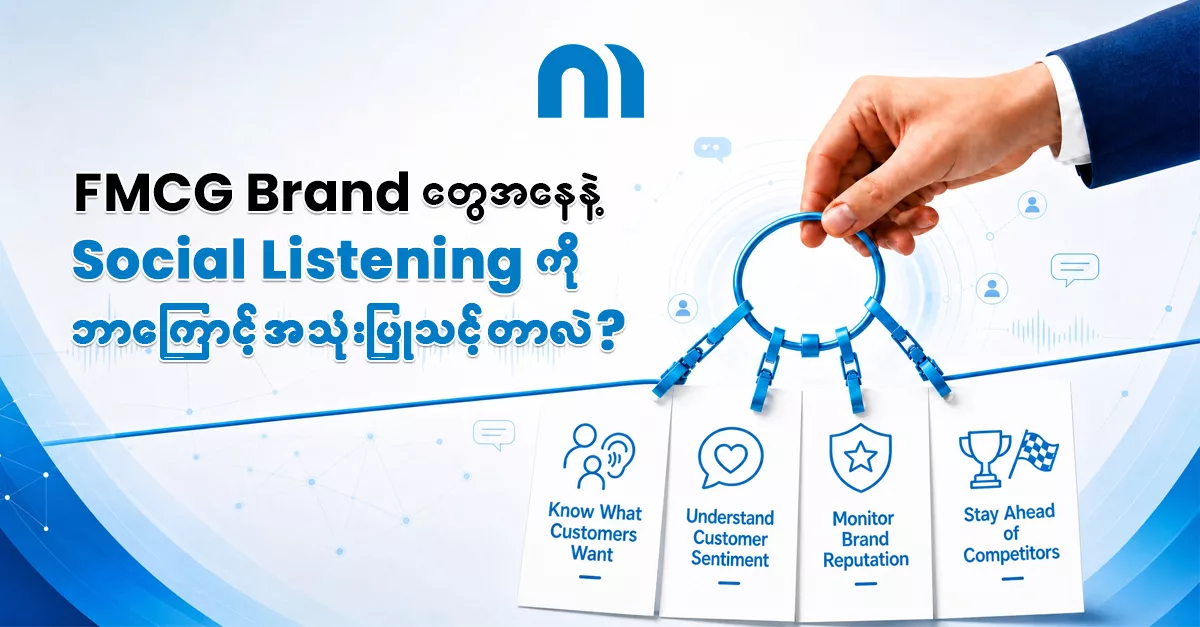
1. Understand What Customers Really Want
What customers say in surveys may differ from what they naturally share on social media. Social Listening helps uncover what customers genuinely like, dislike, and want more of by analyzing real conversations.
This allows brands to develop products and marketing strategies that are more closely aligned with actual customer needs.
2. Understand Customers’ True Sentiment Toward Your Product
After launching a new product, simply looking at the number of likes and comments may not reveal what customers truly think.
With Social Listening, customer sentiment can be analyzed as Positive, Negative, or Neutral, giving brands a clearer understanding of how customers actually perceive their products.
3. Monitor Brand Reputation in Real Time
Brand reputation is especially important for FMCG brands. Issues related to product quality, packaging, poor customer service, or negative campaign feedback can become bigger problems if they are discovered too late.
Social Listening allows brands to continuously monitor what people are saying online, helping them identify potential issues early and take action before they escalate.
4. Understand Customers Better Than Your Competitors
Social Listening is not only about monitoring your own brand. It can also help you analyze customer feedback about competitors, including preferred product features, dislikes, and reactions to promotions.
By understanding what competitors are doing and what their customers want, brands can identify market opportunities and stay one step ahead.
For an FMCG brand, Social Listening is not simply about knowing “What are people saying about my brand?”
It is about understanding customer needs and opinions, identifying changing market trends, analyzing customer reactions to competitors, and turning all of these conversations into actionable insights that can support better business decisions.
AI-powered Social Listening tools like Magnify Myanmar can collect customer voices from various sources not only social media platforms but also offline sources such as newspapers and journals and transform them into valuable insights for your business.
With Magnify Myanmar, uncover valuable Customer Insights and create new opportunities for your brand.
For more information, contact contact@magnifymyanmar.com or 09 408194400 to request a Free Trial.
FMCG Brands တွေအနေနဲ့ Social Listening ကို ဘာကြောင့် အသုံးပြုသင့်တာလဲ?
Digital ခေတ်ဖြစ်လာတာနဲ့ အညီ Customer တွေက ကိုယ့် Brand နဲ့ပတ်သတ်တဲ့ Product၊ Quality၊ Price၊ Packaging၊ Promotion နဲ့ Customer Service တွေအပေါ် သူတိုရဲ့ အတွေ့အကြုံနဲ့ အမြင်တွေကို Social Media ပေါ်မှာ နေ့စဉ်မျှဝေပြောဆိုနေကြပါတယ်။ တစ်ခါတလေ Brand ကို တိုက်ရိုက် Mention မလုပ်ဘဲ Post၊ Comment နဲ့ Review တွေတင်ပြီး ပြောဆိုနေကြတာလည်း ရှိပါတယ်။
ဒီလို Customer တွေရဲ့ ပြောဆိုမှုတွေကို စောင့်ကြည့်ပြီး သူတိုရဲ့အမြင်၊ ခံစားချက်နဲ့ လိုအပ်ချက်တွေကို နားလည်အောင် ကူညီပေးနိုင်တာက Social Listening လုပ်ခြင်းပဲဖြစ်ပါတယ်။
၁။ Customer တွေ တကယ်ဘာလိုချင်လဲ သိနိုင်တယ်။
Survey ဖြေတဲ့အချိန်မှာ ပြောတဲ့အဖြေနဲ့ Social Media ပေါ်မှာ သဘာဝအတိုင်း ပြောဆိုတာက မတူနိုင်ပါဘူး။ Social Listening ကတော့ Customer တွေရဲ့ လက်တွေ့ပြောဆိုမှုတွေကနေ “ဘာကိုကြိုက်တာလဲ?” “ဘာကိုမကြိုက်တာလဲ?” “ဘာကိုပိုလိုချင်တာလဲ?” စတဲ့အကြောင်းအရာတွေကို ရှာဖွေနိုင်ပါတယ်။ ဒါကြောင့် Product Development နဲ့ Marketing Strategy တွေကို Customer ရဲ့ လက်တွေ့လိုအပ်ချက်နဲ့ ပိုနီးစပ်အောင် ချမှတ်နိုင်ပါတယ်။
၂။ Product အပေါ်ရှိနေတဲ့ တကယ့်အမြင် Sentiment ကို သိနိုင်တယ်။
Product အသစ်တစ်ခု Launch လုပ်ပြီးတဲ့အခါ Like နဲ့ Comment အရေအတွက်ကိုပဲ ကြည့်နေရုံနဲ့ Customer တွေရဲ့ တကယ့်အမြင်ကို မသိနိုင်ပါဘူး။ Social Listening မှာတော့ Positive, Negative, Neutral ဆိုပြီး Customer Sentiment ကို ခွဲခြမ်းကြည့်နိုင်တဲ့အတွက် ကိုယ့် Product အပေါ် ကိုယ့် Customer တွေရဲ့ တကယ့် အမြင်ကို ပိုရှင်းရှင်းလင်းလင်း သိနိုင်ပါတယ်။
၃။ Brand Reputation ကို အချိန်နဲ့တပြေးညီ စောင့်ကြည့်နိုင်တယ်။
FMCG Brand တွေအတွက် Reputation က အရမ်းအရေးကြီးပါတယ်။ Product Quality၊ Packaging ပြဿနာ၊ Customer Service မကောင်းတာ ဒါမှမဟုတ် Campaign တစ်ခုအပေါ် Negative Feedback တက်လာတဲ့အခါ နောက်ကျမှ သိရင် ပြဿနာက ပိုကြီးလာနိုင်ပါတယ်။ Social Listening နဲ့ဆို Brand နဲ့ပတ်သက်ပြီး Online မှာ ဘာတွေပြောနေကြလဲကို ဆက်တိုက်စောင့်ကြည့်ပြီး ဖြစ်နိုင်ချေရှိတဲ့ ပြဿနာတွေကို စောစောသိရှိပြီး တားဆီးနိုင်ပါတယ်။
၄။ Competitor တွေထက် Customer ကို ပိုနားလည်နိုင်တယ်။
Social Listening က ကိုယ့် Brand အကြောင်းပဲ နားထောင်ဖိုမဟုတ်ပါဘူး။ Competitor Brand တွေအပေါ် Customer တွေရဲ့ Feedback၊ သူတိုကြိုက်တဲ့ Product Features၊ မကြိုက်တဲ့အချက်တွေ၊ Promotion တွေအပေါ် တုံပြန်မှုတွေကိုပါ လေ့လာနိုင်ပါတယ်။ ဒီ Data တွေကနေတဆင့် “ကိုယ့်ပြိုင်ဘက်တွေ ဘာတွေလုပ်နေလဲ?” “သူတိုCustomer တွေက ဘာလိုချင်နေလဲ?” ဆိုတာကို နားလည်စေနိုင်တဲ့အတွက် ပြိုင်ဘက်တွေထက် ခြေတစ်လှမ်းသာနေစေမှာပဲ ဖြစ်ပါတယ်။
FMCG Brand တစ်ခုအတွက် Social Listening လုပ်တယ်ဆိုတာက “လူတွေက ကိုယ့် Brand အကြောင်း ဘာတွေပြောနေကြလဲ” ဆိုတာကို သိရုံသက်သက်ပဲမဟုတ်ပါဘူး၊ Customer တွေရဲ့ လိုအပ်ချက်နဲ့ အမြင်တွေကို နားလည်ပြီး၊ စျေးကွက်အတွင်း ပြောင်းလဲလာတဲ့ Trend တွေ၊ Competitor တွေအပေါ် Customer တွေရဲ့ တုံပြန်မှုတွေကိုပါ စုစည်းလေ့လာပြီး လုပ်ငန်းဆုံးဖြတ်ချက်တွေအတွက် အသုံးချနိုင်တဲ့ Actionable Insight တွေအဖြစ် ပြောင်းလဲအသုံးချနိုင်ဖို ဖြစ်ပါတယ်။
ဒီလို Customer တွေရဲ့ အသံတွေကို Social Media Platform တွေအပြင် Offline ဖြစ်တဲ့ သတင်းစာ၊ ဂျယ်နယ်စတဲ့ နေရာမျိုးစုံကနေ စုစည်းပြီး သင့်လုပ်ငန်းအတွက် အသုံးဝင်မယ့် Insight တွေကို ထုတ်ပေးနိုင်တဲ့ Magnify Myanmar လို AI-powered Social Listening Tool တွေက FMCG Brand တွေအတွက် အသုံးဝင်တဲ့ Solution တစ်ခု ဖြစ်လာနိုင်ပါတယ်။
ဒါကြောင့် Magnify Myanmar နဲ့အတူ Customer Insights တွေကို ဖော်ထုတ်ပြီး သင့် Brand အတွက် အခွင့်အလမ်းအသစ်တွေကို ဖန်တီးလိုက်ပါ။
အသေးစိတ် စုံစမ်းလိုပါက Email; contact@magnifymyanmar.com (သို) ဖုန်းနံပါတ် 09 408194400 သို ဆက်သွယ်ကာ Free Trial ရယူနိုင်ပါတယ်။
Turn Customer Feedback into Opportunities with Media Monitoring
In today’s digital era, simply knowing your own business is no longer enough to achieve long-term success. Understanding what consumers think and say about your brand, products, and services in real time has become essential.
With Myanmar’s market constantly evolving and consumers’ voices becoming louder, Media Monitoring is essential for turning every piece of feedback into an opportunity.
What is Media Monitoring?
Media Monitoring is the process of continuously monitoring, collecting, and analyzing information about your business across online platforms in real time. It helps transform large amounts of information into valuable insights that can support better business decisions.
However, implementing an effective Media Monitoring process comes with several challenges for business owners and marketers.
1. Information Overload
One of the biggest challenges is the massive volume of information shared across social media. In Myanmar, more than 3 million posts, 109 million comments, and 40 million engagements can be generated every hour. Manually monitoring all of this content is extremely time-consuming and inefficient.
2. Missing Critical Feedback
A negative post or comment can quickly develop into a crisis—especially when it happens during holidays or outside working hours. If these conversations are not detected in time, they can seriously damage your brand’s reputation.
3. Understanding Customer Pain Points
Another challenge is identifying customers’ needs and pain points in time to take action. Beyond simply reading words, businesses need to understand the underlying sentiment—whether customers are positive, negative, or simply seeking information. This requires deeper data analysis to uncover meaningful insights.
4. Having a Comprehensive View
Effective monitoring should go beyond online media. In Myanmar, traditional media such as newspapers and journals still play an important role. Being able to monitor multiple media channels in one place is essential for gaining a complete picture of your brand’s presence.
Magnify Myanmar is Myanmar’s first One-Stop Media Monitoring Tool, designed to help businesses overcome these challenges efficiently.
In today’s highly competitive market, staying one step ahead of your competitors depends greatly on how quickly and accurately you can turn customer feedback into actionable insights.
With Magnify Myanmar, understand your customers’ needs in real time and turn their feedback into new opportunities for growth.
Want to learn more?
Contact us at contact@magnifymyanmar.com or 09 408 194 400 to get your Free Trial today.
Myanmar Social Media Marketing: Market Research & Strategy
Executive Summary: Myanmar’s digital growth has accelerated: by late 2025 there were ~39.8 million internet users (72.5% penetration) and 21.0 million active social media accounts[1][2]. Leading platforms are TikTok (≈19.6M adult users) and Facebook (≈13.1M users)[3], with robust usage on messaging apps (Viber ≈15M, Messenger ≈13.5M)[4][5]. The population skews young (median age ~30)[6] and mobile-first (62.5M mobile connections, 114% of population)[7]. Consumers engage most with video/visual content (typically 3–4× higher engagement than text)[8], especially at peak times (early morning 6–8 AM and late evening 9–11 PM[8], with platform-specific peaks like Facebook ~4 PM and TikTok ~7 PM[9][10]). The digital opportunity for brands: use a mix of organic and paid content, tailored per platform, and measure via clear KPIs (follower growth, reach, engagement rates, web traffic/conversions). Legally, Myanmar has no comprehensive data protection law[11], but businesses must avoid spam (Cybersecurity Law fines unsolicited messaging)[12] and follow content rules (no offensive or political ads)[13]. This report provides a Myanmar-focused strategy: platform stats and best practices, case studies of local campaigns, practical SME recommendations (content types, cadence, ad/organic mix, budgets), research/listening tools, and ethical considerations.
Internet & Mobile Landscape
Myanmar’s internet and mobile penetration have surged recently. As of late 2025, ~39.8 million people (~72.5% of 54.9M population) were internet users[1]. Mobile broadband is ubiquitous: 62.5M cellular connections (114% of people)[7] and 96.8% of those are 3G/4G/5G. Urbanization is still modest (33% urban)[14], so rural mobile access remains key. A young demographic (median age 30.1)[15] means social content must suit millennials/Gen Z tastes. Myanmar’s economy is becoming more digital (e-commerce, fintech, edtech, entertainment), fueling social media growth.
Platform usage: According to industry data, Facebook and TikTok dominate social media. In early 2025, Facebook counted ~13.1M users (~23.9% of population)[3], while TikTok had ~19.6M users aged 18+ (ad reach to 50.5% of adults)[16]. Other platforms have smaller user bases: Instagram (~0.87M, ~1.6% pop)[17], LinkedIn (~1.11M, ~1.9% pop)[18]. On messaging, Facebook Messenger reached ~13.55M (23.4% of pop)[5], and Viber is estimated around 15M users (~37% of internet users)[4]. (Local sources report Viber consistently ranks in Myanmar’s top 5 apps[19][4].) These stats imply multi-platform strategies: for mass reach use Facebook/Messenger, for younger audiences use TikTok/Instagram, and for high-trust engagement use Viber/Telegram.
Figure: Top-ranked social media apps in Myanmar by Google Play downloads (42Matters data) – Facebook, TikTok, YouTube lead the market.
Platforms compete for attention: older users may stick to Facebook and TV-like content, while youth flock to short video (TikTok, then YouTube). Mobile-only users (95% of internet users) favor snackable formats (short videos, images) and instant messaging. A platform-share pie might show TikTok’s slice growing relative to Facebook.
Social Media Content & Engagement
Myanmar audiences respond strongly to visual and interactive content. Studies find that visual posts (images, infographics, video) can achieve 3–4× the engagement of plain text[8]. Creative stories or real-life scenes (e.g. lifestyle, travel, food, celebrities) are highly shareable. Including questions and calls-to-action boosts comments: posts phrased as questions get ~2–3× more comments[8].
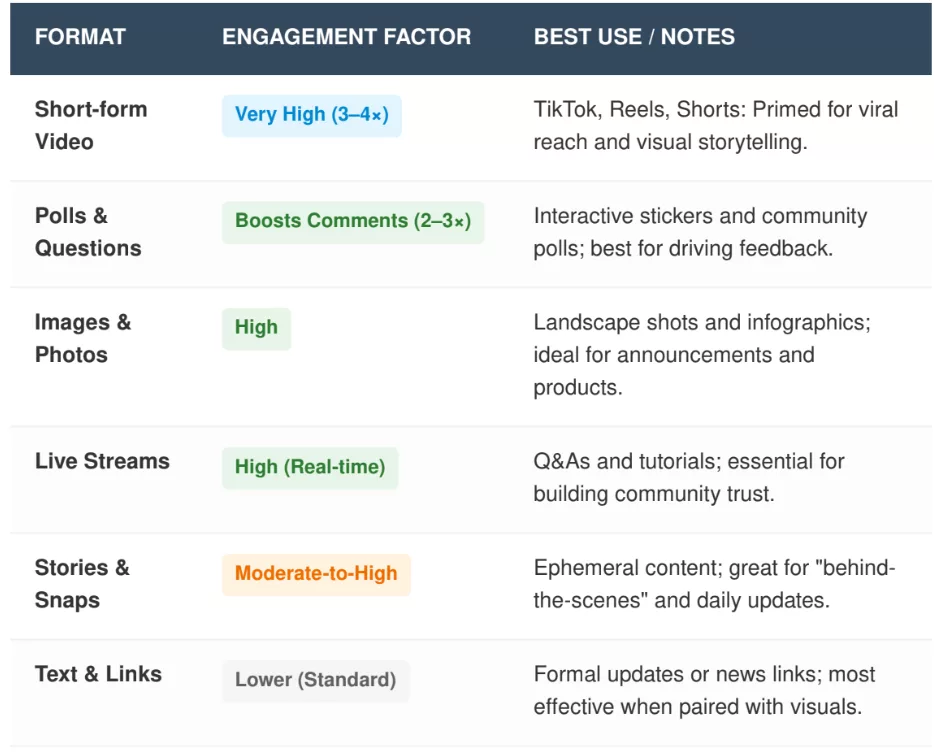
Regardless of format, posts in Burmese (or local dialects) outperform foreign-language content. Emojis, memes, and local cultural references increase relatability. Ideally, video dominates – TikTok trends and Facebook Watch: vertical short videos (15-60s) engage best. For example, an image-based infographic on Myanmar mobile stats yielded 3–4× more engagement than text posts in a local agency’s analysis[8].
Peak engagement times (by platform):
- Global insight suggests many users scroll early morning (6–8 AM) and late evening (9–11 PM)[8].
- Facebook in Myanmar sees a late-afternoon spike (~4 PM)[9].
- TikTok peaks around 7–8 PM when people relax[10].
- Instagram is active during mornings, lunch breaks, and evenings[20].
- LinkedIn suits mid-week business hours (Tue–Thu 10 AM–1 PM)[21].
- YouTube performs best on weekday afternoons and weekend mornings[22].
Optimizing to these slots can boost reach. In practice, content calendars schedule major posts around 7 AM (wake-up scroll), noon (lunch break), or after 7 PM. Live sessions or Story posts can fill gaps.
Figure: Demographic breakdown of Facebook users in Myanmar (NapoleonCat, Dec 2025). Young adults (25–34) form the largest group; gender is roughly balanced.
Platform demographics have practical implications: e.g., with ~50% of Facebook users aged 25–34【38†】, brands target millennials on FB. In contrast, TikTok in Myanmar skews male and young (about 39% female users[23]). Messenger’s user base (50% female[5]) suggests using chatbots and customer care. LinkedIn is small and urban-professional (largely 25–34[18]), so focus B2B content there.
Platform-Specific Strategies
- Facebook & Messenger: Still the largest user base for most brands. Use a mix of image posts, video (FB Live, Watch), and community engagement. Paid ads on FB remain vital for reach – CPMs are relatively low in Myanmar. Best practices: local-language content, community groups (FB Groups have high loyalty), and interactive posts (polls, quizzes). Case Study: ADDA Shoes (local footwear brand) used a “New Year, New ADDA” social campaign to double its page likes from ~18K to ~283K by July 2023[24], by encouraging fans to share New Year moments (371 comments, 2.3K reactions)[25]. Their case highlights consistent posting and contest-driven engagement on FB. Aim for ~3–5 FB posts/week (mix of posts and Stories) and daily Messenger/WhatsApp outreach.
- TikTok: The explosive growth channel in Myanmar. Content must be native TikTok style: short, trending music, authentic and entertaining. Brands should create narrative or challenge videos rather than direct ads. Case Study: BAWDAR Beer crafted a mini-series of relatable teen friend stories on TikTok, quickly amassing 100K followers and 5.7M views in 2.5 months, becoming the #1 beer brand on TikTok[26]. Lesson: storytelling over hard-sell. Posting at least 3–5 times/week (especially evenings around 7 PM[10]) is recommended to build momentum. Use branded hashtags and collaborate with local influencers (who are very effective on TikTok) to amplify reach.
- Instagram: For consumer brands (food, travel, fashion). Focus on high-quality photos and Reels. Engagement is driven by visual appeal and storytelling in captions (Burmese + English if targeting young bilinguals). Posting 3–5 feed posts per week plus daily Stories. Use relevant local hashtags. Influencer tie-ups and giveaways (e.g. following + tagging) work well. Instagram’s younger audience suggests lighter, creative content (memes, DIY, lifestyle).
Figure: Demographics of Instagram users in Myanmar (NapoleonCat, Dec 2025) showing 55.3% female and 44.7% male[17]. The 25–34 age group is largest.
- YouTube: Popular for entertainment and tutorials. Brands can post longer-form videos (product demos, how-tos, interviews). Leverage YouTube Shorts too. Publish ~1 video every 1–2 weeks; optimize for 2–4 PM on weekdays[22]. Ads via YouTube (Google Ads) can target high-income urban audiences. For example, tech and education brands do well here.
- Viber/Telegram: Essential “conversational” platforms. Viber (≈15M users[4]) is used for customer service and direct offers. Businesses run official Viber Community channels (broadcast) to share updates or promotions (users must opt-in). Since Viber bypasses algorithms, it gets high open rates. Telegram (≈6M active) is strong for niche communities and loyalty programs. Use them for announcements, signup broadcasts, and 1:1 support (e.g. banks and e-commerce use Viber chatbots). Viber and Telegram should be integrated into strategy for direct engagement and “closing” sales[4].
- Local platforms: No major new social networks, but note: Reddit and X have very small followings. Local content sites (Myanmar-language news portals) can be used for PR releases or native ads. SMS/MMS and popular local apps (e.g. KBZPay promotions) can complement social efforts.
Case Studies of Myanmar Campaigns
Multiple Myanmar brands have run successful social campaigns. Key examples:
- BAWDAR Beer – TikTok Mini-Series: To capture Gen Z, Bawdar launched a micro-drama series on TikTok about “friends” (the brand’s meaning)[27]. With authentic storytelling (no heavy branding), they hit 100K+ followers and a video with 5.7M views. In 2.5 months they became Myanmar’s top beer brand on TikTok[26]. Measurable Outcome: +100K fans, +5.7M views, #1 engagement in category. Insight: Narrative video content can explode engagement on TikTok.
- ADDA Shoes – Facebook Growth: Starting January 2021, local shoe seller ADDA had ~18K FB likes. Newness Agency’s “New Year, New ADDA” campaign encouraged fans to share New Year moments. The result: reactions jumped to 2.3K and comments 371, and page likes soared to ~283K by mid-2023[24]. Outcome: ~15× fan increase in 2.5 years. Insight: Consistent creative posting + contests drives organic follower growth on Facebook.
- Samudra Biscuits – Multi-Channel Push: Malaysian cookie brand Samudra used TV, TikTok videos, social giveaways and sampling. Their campaign achieved ~3.1 million reach and 4.7 million impressions online, while reducing product return rate to <10%[28]. Outcome: High digital reach (3.1M) and visibility (4.7M) in Myanmar. Insight: Combining social (incl. TikTok) with offline sampling builds awareness and brand trust.
- FAME Pharma – Art Competition: (Reported in [49]) This 2023 campaign invited Myanmar digital artists to design product packaging. It went viral among youth, positioning the pharmaceutical brand as community-focused. Note: While exact metrics are private, it illustrates using UGC (user-generated content) contests for engagement.
- Samsung “Love Letter” Campaign: (Reported in [49]) In 2022 Samsung Myanmar tapped the viral trend of online love letters. Their simple heartfelt posts on social garnered widespread shares and press attention. Insight: Emotion-driven, culturally resonant themes can outperform flashy ads.
- KFC TikTok Ads: Although a global case, KFC Myanmar could mimic the global TikTok campaign that achieved 14.9M+ impressions and 7.9M+ reach[29] by using TikTok’s In-Feed ads. For local use, similar strategies (catchy food videos, songs) can drive awareness among urban youth.
These examples show measurable success (followers, reach, engagement) and common threads: local cultural relevance, narrative content, and leveraging platforms natively.
Practical Recommendations for SMEs & Marketers
- Content Types: Prioritize high-engagement formats: short videos (Reels/TikToks) and striking images. Use local influencers or micro-influencers to co-create content. Mix educational/informative posts (e.g. tips) with entertaining posts (memes, stories). Use Burmese language predominantly, with occasional English or ethnic language when targeting specific groups.
- Posting Cadence: Consistency is key. As a rule, plan ~3–5 Facebook/Instagram posts per week, 3–5 TikToks/week, and 1–2 YouTube videos per month. Post Instagram Stories or Viber messages daily for top-of-mind presence. Below is a sample monthly content schedule template (add details per brand):
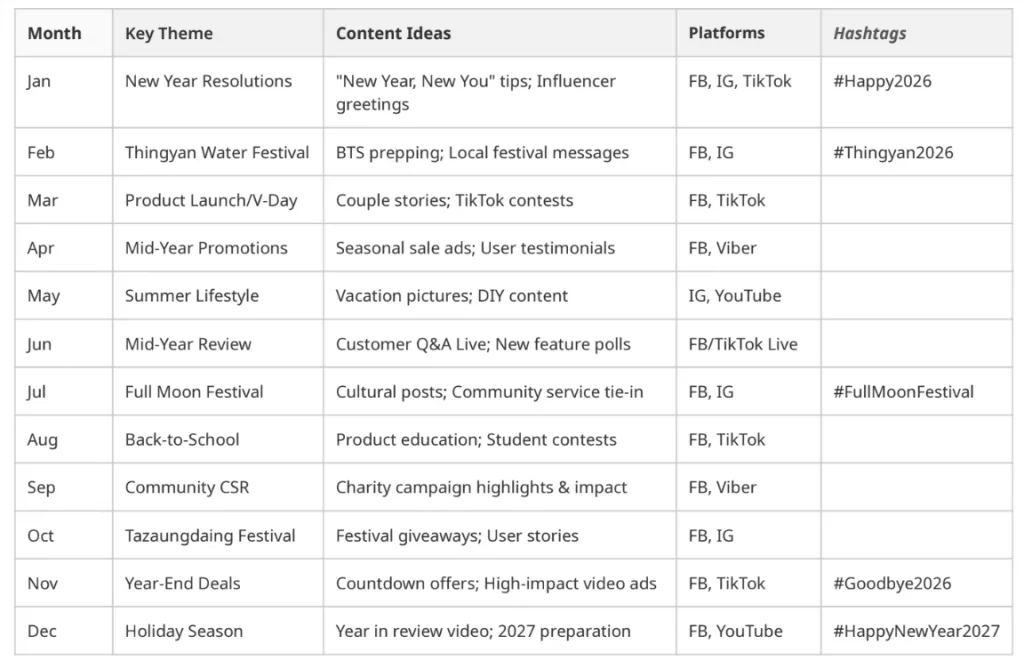
Table: Sample 12-month content calendar template (themes may vary by industry).
- Ad vs Organic Mix: Start with organic posts to build brand voice, then amplify key posts via paid ads. For Facebook/Instagram ads, even small budgets (~200K–500K MMK/month, i.e. ~USD100–250) can reach tens of thousands. Allocate ~20–30% of spend on brand awareness (top-funnel), ~70% on conversion goals (traffic, lead gen). Given low average CPMs in Myanmar, ads are cost-effective. Meanwhile, organic engagement (comments, shares) is crucial for algorithms, so schedule both. Use platform analytics to reallocate: e.g. boost posts that already get organic traction.
- KPIs to Track: Key metrics include follower growth, reach/impressions, and engagement rate (likes+comments+shares divided by reach). Also track click-through rate (CTR) to your site, conversion actions (sales, sign-ups), and cost per action for ads. For campaigns, measure specific outcomes (e.g. contest entries, video views). Sentiment and share-of-voice (via listening tools) gauge brand perception. Set SMART goals (e.g. “increase Instagram followers 20% in 6 months” or “improve engagement rate by 5%”).
Tools for Market Research & Social Listening
Local and global tools can help tailor strategy. For Myanmar content and language, Magnify Myanmar’s AI-powered social listening tool is designed to monitor Burmese-language conversations on news sites, forums, and social media[30]. It can track brand mentions, sentiment, and trending topics in real time. Global platforms like Brandwatch, Sprout Social, Hootsuite Insights, or Talkwalker can also be used, though they may not parse Burmese as well. Google Trends gives insight into search interest in local topics. Use platform-native insights (Meta Business Suite, TikTok Analytics, YouTube Studio) to analyze audience demographics and content performance. For competitive research, study local leaderboards (e.g. NapoleonCat) and agency reports.
In practice, set up keyword/hashtag alerts (e.g. brand name, industry terms) in these tools to watch customer feedback and emerging trends. For example, social listening may reveal a viral challenge or a competitor move early, allowing your brand to adapt content quickly. Regularly review analytics dashboards (weekly/monthly) to refine targeting and creative strategy.
Ethical & Legal Considerations
- Data Privacy: Myanmar currently lacks a comprehensive personal data protection law[11]. Nonetheless, companies should adopt global best practices: obtain user consent for data collection (e.g. cookies, mailing lists), allow opt-outs, and secure customer data. Treat user information (emails, contact info) with care. Note: the 2025 Cybersecurity Law penalizes spam/unwanted messaging (fines MMK5–20M or jail)[12], so always use opt-in methods for newsletters or Viber broadcasts.
- Advertising Regulations: Ads must comply with the Consumer Protection Law and local media guidelines. Avoid prohibited content: for instance, ads must not insult religion or national symbols[13]. Political or electioneering ads are heavily restricted (and outside this guide’s scope). Follow truth-in-advertising rules: no false claims (e.g. miracle cures) and no unfair comparisons. Influencer collaborations should be transparently disclosed.
- Content Ethics: Respect Myanmar’s cultural norms (family values, religion, language). Avoid sensitive political or ethnic topics entirely. Aim for positive, community-building messaging. If targeting minors (e.g. toys, education), take extra care and parental consent for any contest or data use.
- Platform Policies: Each platform has its own rules (e.g. no hate speech, no cyberbullying). Ensure all content abides by Facebook’s Community Standards, TikTok’s guidelines, etc. Periodically review these to avoid takedowns.
By following these guidelines and leveraging Myanmar-specific insights, businesses can craft a data-driven social media strategy tailored to local audiences. The charts and tables above summarize key metrics and best practices. For example, plotting platform user growth over time (line chart) or market share (pie chart) can help visualize where to invest. A suggested Mermaid flowchart of our strategy loop could be:
This end-to-end cycle (research → strategize → create → post → measure) ensures continuous improvement. Using tools like those above at each stage will keep your social media efforts both effective and compliant in Myanmar.
Sources: Authoritative reports and local industry analyses were used, including DataReportal’s Digital 2025/2026: Myanmar[2][1], NapoleonCat social stats[5][17], and insights from Myanmar digital agencies[24][4][9]. These, along with academic and news sources, provide the data and case examples informing the recommendations above.
[1] [2] [6] [7] [14] [15] Digital 2026: Myanmar — DataReportal – Global Digital Insights
[3] [16] [17] [23] Digital 2025: Myanmar — DataReportal – Global Digital Insights
[4] [19] Messaging Apps Usage & Engagement Report Myanmar (2025-2026) | Newness
[5] [18] Social Media Users in Myanmar – 2025 | NapoleonCat
[8] Social Media Landscape in Myanmar: The Complete Strategic Guide | Hashmeta
[9] [10] [20] [21] [22] Best Posting Time Myanmar: 2025 Social Media Guide
[11] Data protection laws in Myanmar – Data Protection Laws of the World
[12] Myanmar Cybersecurity Law Takes Effect – Tilleke & Gibbins
[13] avia.org
[24] [25] ADDA Myanmar Case Study | Newness
[26] [27] Case Study: How BAWDAR Beer Became #1 on TikTok in Under 3 Months
[28] Samudra Myanmar Digital Marketing Case Studies
[29] KFC | TikTok for Business Case Study
[30] Magnify Myanmar’s Social Listening and Media Monitoring Tool: Revolutionizing Industry Insights with AI-Powered NLP