Tag: Burmese sentiment analysis
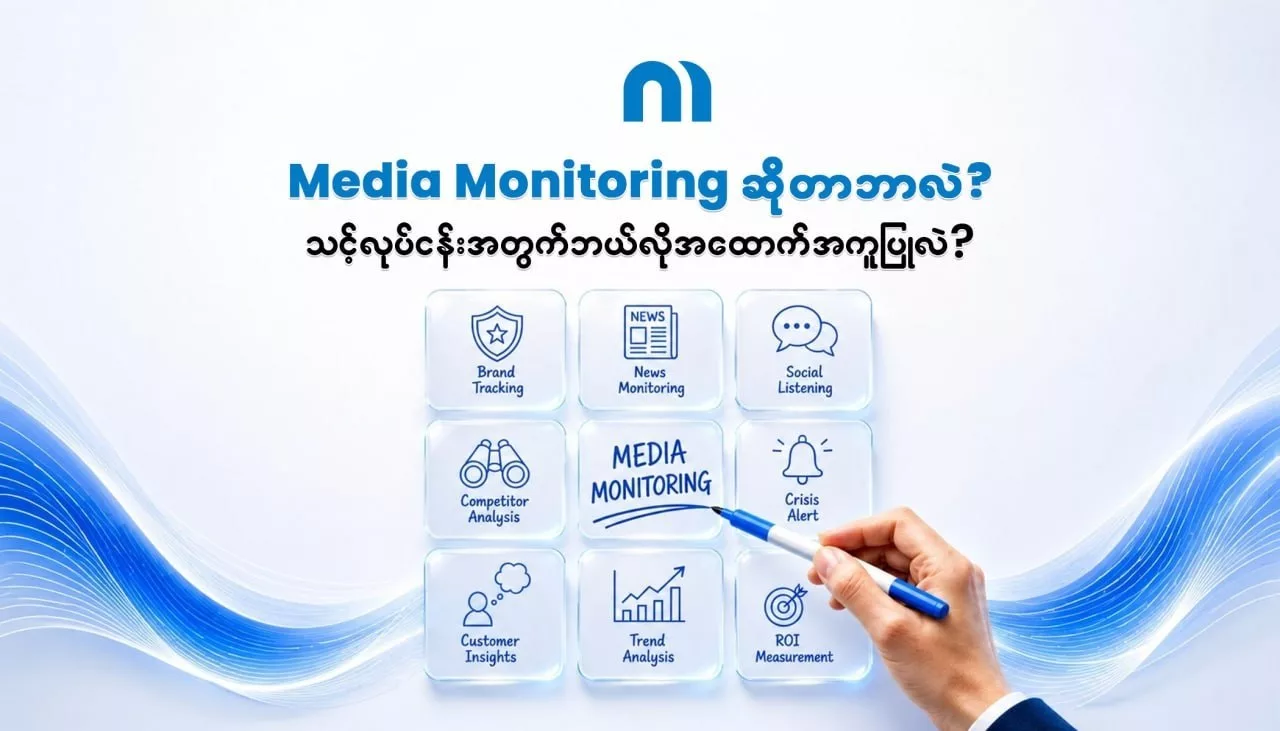
Media Monitoring ဆိုတာ ဘာလဲ? သင့်လုပ်ငန်းအတွက် ဘာကြောင့် မရှိမဖြစ် လိုအပ်လာတာလဲ?
ယနေ့ Digital ခေတ်ကြီးမှာ လူတွေဟာ Brand တစ်ခုနဲ့ပတ်သက်တဲ့ အမြင်တွေ၊ အတွေ့အကြုံတွေကို Facebook, Tiktok စတဲ့ Social Media Platforms မျိုးစုံကနေ နေ့စဉ် မျှဝေနေကြပါတယ်။ အဲဒီလို ပြောဆိုမှုတွေဟာ Brand ရဲ့ ဂုဏ်သတင်းကို ပိုမိုကောင်းမွန်လာအောင် တည်ဆောက်ပေးနိုင်သလို ပိုမိုဆိုးရွားသွားအောင်လည်း လုပ်နိုင်စွမ်း ရှိကြပါတယ်။
ဒီလိုအခြေအနေမှာ Media Monitoring ဟာ လုပ်ငန်းတိုင်းအတွက် အရေးကြီးတဲ့ Business Intelligence Tool တစ်ခုအဖြစ် ရပ်တည်လာပါတယ်။
• Media Monitoring ဆိုတာ ဘာလဲ?
Media Monitoring ဆိုတာ သင့်လုပ်ငန်း၊ Brand၊ Product၊ Competitor နဲ့ သက်ဆိုင်တဲ့ အွန်လိုင်းနဲ့ အော့ဖ်လိုင်း မီဒီယာတွေမှာ ထွက်ပေါ်နေတဲ့ အချက်အလက်တွေကို အချိန်နဲ့တစ်ပြေးညီ စောင့်ကြည့်၊ စုဆောင်းပြီး ခွဲခြမ်းစိတ်ဖြာပေးတဲ့ လုပ်ငန်းစဉ်တစ်ခု ဖြစ်ပါတယ်။
ရရှိလာတဲ့ အချက်အလက်တွေကို Insight အဖြစ် ပြောင်းလဲပေးတာကြောင့် Marketing Strategy၊ Customer Experience နဲ့ Business Decision တွေကို ပိုမိုထိရောက်စွာ ချမှတ်နိုင်ပါတယ်။
Media Monitoring က ဘာကြောင့် အရေးကြီးတာလဲ?
• Brand Reputation ကို ကာကွယ်ပေးနိုင်တယ်။
သင့်လုပ်ငန်းနဲ့ ပတ်သတ်ပြီး မကောင်းတဲ့ မှတ်ချက်တစ်ခုဟာ အချိန်တိုအတွင်း လူအများဆီ ပျံ့နှံ့သွားနိုင်ပါတယ်။ အချိန်မီ သိရှိထားမယ်ဆိုရင် ပြဿနာကို ကြီးမားမလာခင်မှာပဲ ဖြေရှင်းနိုင်ပြီး ကိုယ့် Brand ရဲ့ ယုံကြည်မှုကိုလည်း ထိန်းထားနိုင်ပါတယ်။
• Customer တွေကို ပိုနားလည်နိုင်တယ်။
ဖောက်သည်တွေ ဘာကို သဘောကျနေကြလဲ၊ ဘာကို မကျေနပ်ကြလဲ၊ ဘာတွေ မျှော်လင့်နေကြလဲဆိုတာကို သိရှိနိုင်တဲ့အတွက် သူတို့ရဲ့ လိုအပ်ချက်နဲ့ ကိုက်ညီတဲ့ ကုန်ပစ္စည်းနဲ့ ဝန်ဆောင်မှုတွေကို ဖန်တီးနိုင်ပါတယ်။
• ပြိုင်ဘက်တွေရဲ့ လှုပ်ရှားမှုကို သိရှိနိုင်တယ်။
ပြိုင်ဘက်တွေ ဘာတွေ လုပ်နေကြလဲ၊ ဘယ်လိုအကြောင်းအရာတွေက လူစိတ်ဝင်စားမှု ရနေသလဲ၊ လူတွေရဲ့ တုံ့ပြန်မှုက ဘယ်လိုရှိသလဲဆိုတာကို လေ့လာနိုင်တာကြောင့် ကိုယ့်လုပ်ငန်းအတွက် ပိုကောင်းတဲ့ မဟာဗျူဟာတွေ ချမှတ်နိုင်ပါတယ်။
• ဈေးကွက်ရဲ့ အပြောင်းအလဲကို အချိန်မီ သိနိုင်တယ်။
လူတွေ ဘာအကြောင်းအရာကို စိတ်ဝင်စားနေကြသလဲ၊ ဈေးကွက်က ဘယ်ကို ဦးတည်နေသလဲဆိုတာကို အချိန်နဲ့တစ်ပြေးညီ သိရှိနိုင်တဲ့အတွက် အပြောင်းအလဲတွေကို လျင်မြန်စွာ လိုက်လျောညီထွေဖြစ်အောင် လုပ်ဆောင်နိုင်ပါတယ်။
• အချက်အလက်ကို အခြေခံပြီး ဆုံးဖြတ်နိုင်တယ်။
နေ့စဥ် Online ပေါ်မှာ ထွက်ပေါ်နေတဲ့ အချက်အလက်တွေဟာ များပြားလွန်းတာကြောင့် လူအင်အားနဲ့ လိုက်လံစောင့်ကြည့်ဖို့ မလွယ်ကူပါဘူး။ ဒါပေမယ့် Media Monitoring လုပ်ပြီး စောင့်ကြည့် လေ့လာတဲ့အခါ လုပ်ငန်းအတွက် အသုံးဝင်တဲ့ Insight တွေရရှိပြီး ပိုမိုထိရောက်တဲ့ ဆုံးဖြတ်ချက်တွေချမှတ်နိုင်မှာပဲ ဖြစ်ပါတယ်။
Magnify Myanmar ရဲ့ Media Monitoring ဝန်ဆောင်မှု
Magnify Myanmar ရဲ့ Media Monitoring Service က Social Media Platform တွေ၊ Online News Website တွေတင်မကဘဲ သတင်းစာ၊ ဂျာနယ် စတဲ့ Offline Media တွေက အချက်အလက်တွေကိုပါ တစ်နေရာတည်းမှာ စုစည်းပြီး သင့်လုပ်ငန်းအတွက် အရေးပါတဲ့ အချက်အလက်တွေကို အချိန်နဲ့ တစ်ပြေးညီ သိရှိနိုင်အောင် ကူညီပေးနိုင်ပါတယ်။
ယနေ့စီးပွားရေးလောကမှာ ရရှိလာတဲ့အချက်အလက်တွေကို လုပ်ငန်းအတွက် အသုံးဝင်တဲ့ Insight တွေအဖြစ် မြန်မြန်ဆန်ဆန် ပြောင်းလဲ သိရှိနိုင်ခြင်းဟာ ပြိုင်ဘက်တွေထက် ခြေတစ်လှမ်းသာနေစေမယ့် အားသာချက်တစ်ခု ဖြစ်လာပါတယ်။
Media Monitoring က သင့် Brand Reputation ကို ကာကွယ်ပေးရုံသာမက Customer တွေကို ပိုမိုနားလည်စေပြီး Market Trend နဲ့ Competitor Activity တွေကို အချိန်နဲ့တစ်ပြေးညီ သိရှိနိုင်အောင် ကူညီပေးပါတယ်။
မှန်ကန်တဲ့ အချက်အလက်တွေကို အချိန်မီ သိရှိနိုင်ခြင်းက မှန်ကန်တဲ့ ဆုံးဖြတ်ချက်တွေရဲ့ အစဖြစ်ပါတယ်။
Magnify Myanmar ရဲ့ Media Monitoring Service အကြောင်း ပိုမိုသိရှိလိုပါက contact@magnifymyanmar.com သို့ Email ပို့ခြင်း သို့မဟုတ် 09 408194400 သို့ ဆက်သွယ်၍ Free Trial ကို ရယူနိုင်ပါတယ်။
Understanding Media Monitoring and Why It Matters for Your Business?
In today’s digital age, people daily share their opinions and experiences regarding various brands across multiple social media platforms like Facebook and TikTok. These conversations hold the power to either build a brand’s reputation or severely damage it.
Amidst this landscape, Media Monitoring has emerged as a crucial business intelligence tool for every organization.
What is Media Monitoring?
Media Monitoring is the process of tracking, gathering, and analyzing real-time data and mentions about your business, brand, products, competitors, and industry across both online and offline media channels.
It transforms raw data into actionable insights, enabling businesses to make more effective marketing strategies, improve customer experiences, and drive better business decisions.
Why is Media Monitoring Essential for Your Business?
• Protects Brand Reputation: A single negative review about your business can spread rapidly in a short amount of time. Catching it early allows you to resolve issues before they escalate, preserving your brand trust.
•Deepens Customer Understanding: By knowing what customers like, dislike, and expect, you can tailor your products and services to meet their exact needs.
• Tracks Competitor Activity: Observing what your competitors are doing, what content is trending, and how audiences are reacting helps you craft stronger, more competitive strategies.
• Identifies Market Trends Instantly: Real-time visibility into what people are currently interested in and where the market is heading ensures your business can adapt quickly.
• Data-Driven Decision Making: With massive volumes of online data generated daily, manual tracking is nearly impossible. Media Monitoring extracts valuable insights, empowering you to make smarter, data-backed decisions.
Magnify Myanmar’s Media Monitoring Service
Magnify Myanmar’s Media Monitoring Service seamlessly aggregates data from social media platforms, online news websites, and traditional offline media like newspapers and journals into a single dashboard, helping you stay informed in real time.
In today’s business world, the ability to quickly convert data into actionable insights is the ultimate competitive advantage that keeps you one step ahead.
Media Monitoring does more than just protect your brand reputation; it helps you truly understand your customers, track competitor activities, and stay updated on market trends in real time.
Timely access to accurate information is the foundation of smart decision-making.
Get Started Today: To learn more about Magnify Myanmar’s Media Monitoring Service, send an email to contact@magnifymyanmar.com or call 09 408194400 to claim your Free Trial!

How significant is a customer’s voice in the FMCG industry? 📢
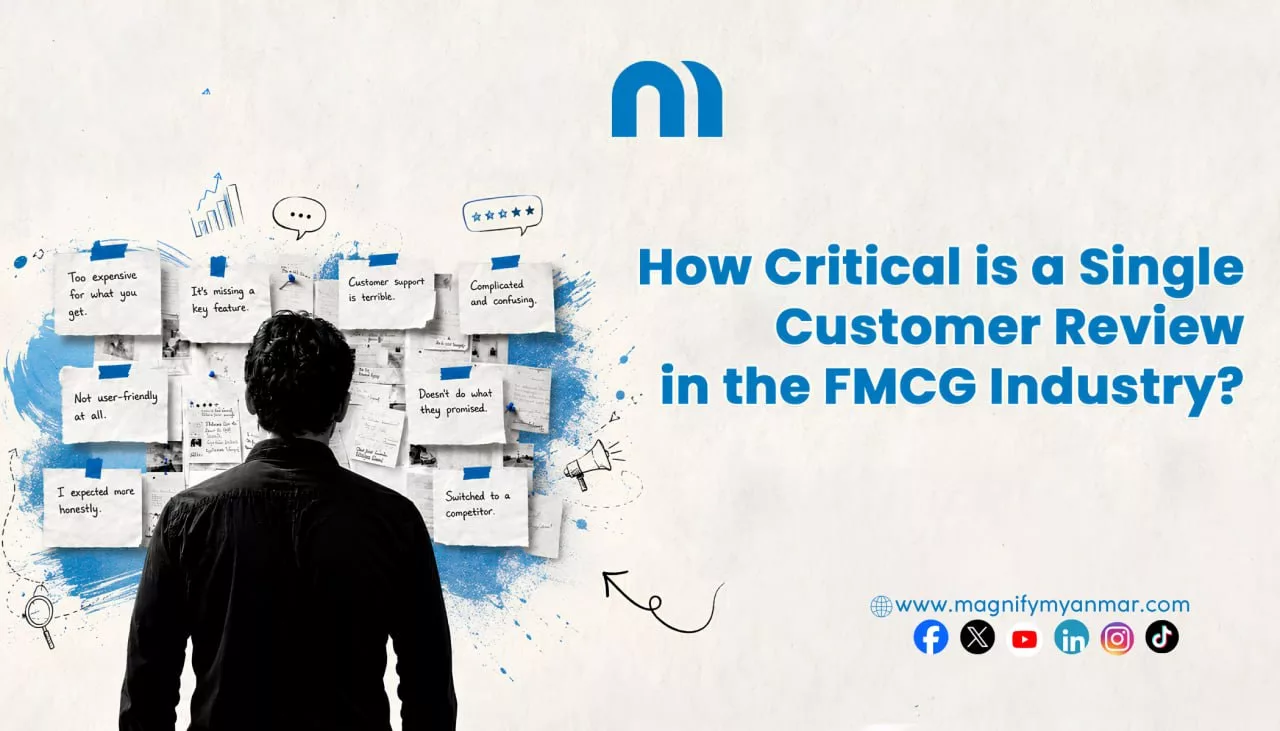
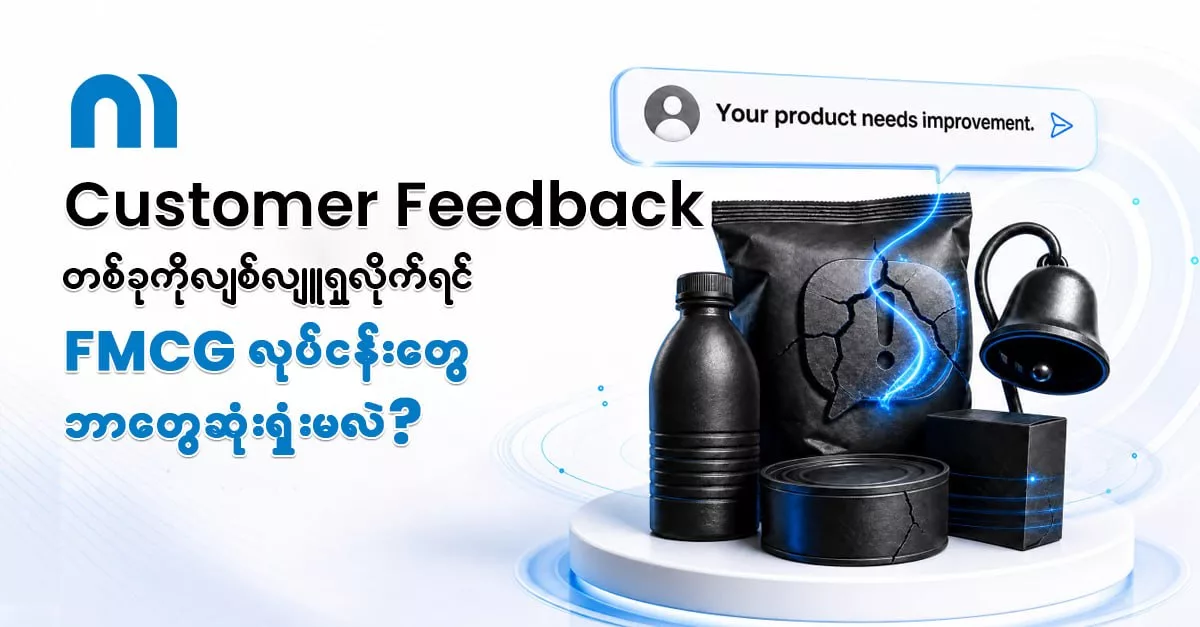
In the FMCG industry, the success of a product is not solely dependent on the number of items placed on the shelf. The most crucial factor is, “What kind of feelings do consumers have towards your brand?”
In this digital age, a single customer review carries immense weight. But are you aware that behind those reviews lie valuable consumer insights for your business?
📈 Every negative review from a customer is free market research for your business. Do not be discouraged by it. Listen to those voices and rectify them as quickly as possible. These actions will not only make your product better but will also automatically build customer loyalty.
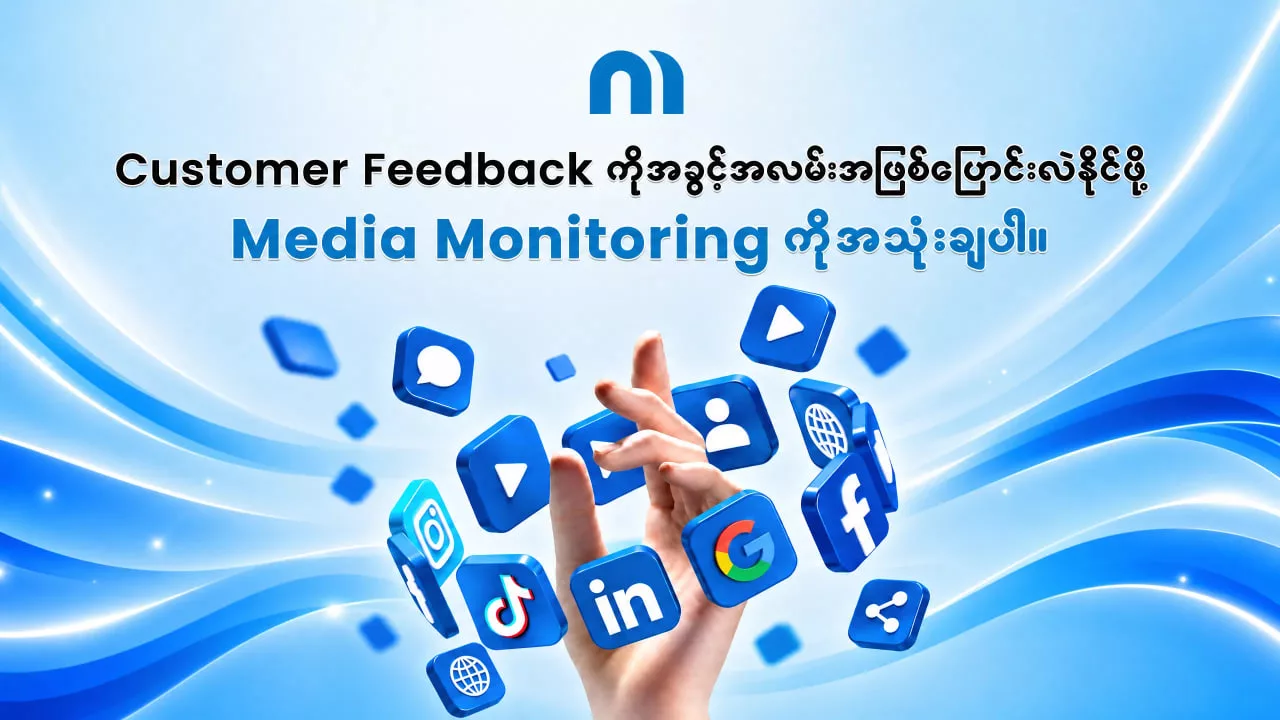
📈 Social Listening is the key to measuring consumers’ state of mind in real-time. Systematically analyzing what is being said about your brand and your competitors on social media is essential for every FMCG business. This is the best strategy to keep up with trends and proactively prevent potential crises.
📈 Customers trust reviews from others more than they trust advertisements. Numerous positive reviews become the best form of advertising and can instill trust in your brand.
In your brands, to what extent are you effectively utilizing consumer insights?
Even if you have a vast amount of data, if you are struggling to find solutions for business growth, Magnify Myanmar has the answer for you. Magnify Myanmar specializes in deeply analyzing information within the FMCG sector and effectively fulfilling the true needs of brands.
Through our professional Social Listening and Competitor Benchmarking services, let’s partner with Magnify Myanmar today to build more robust strategies for your brand’s future.
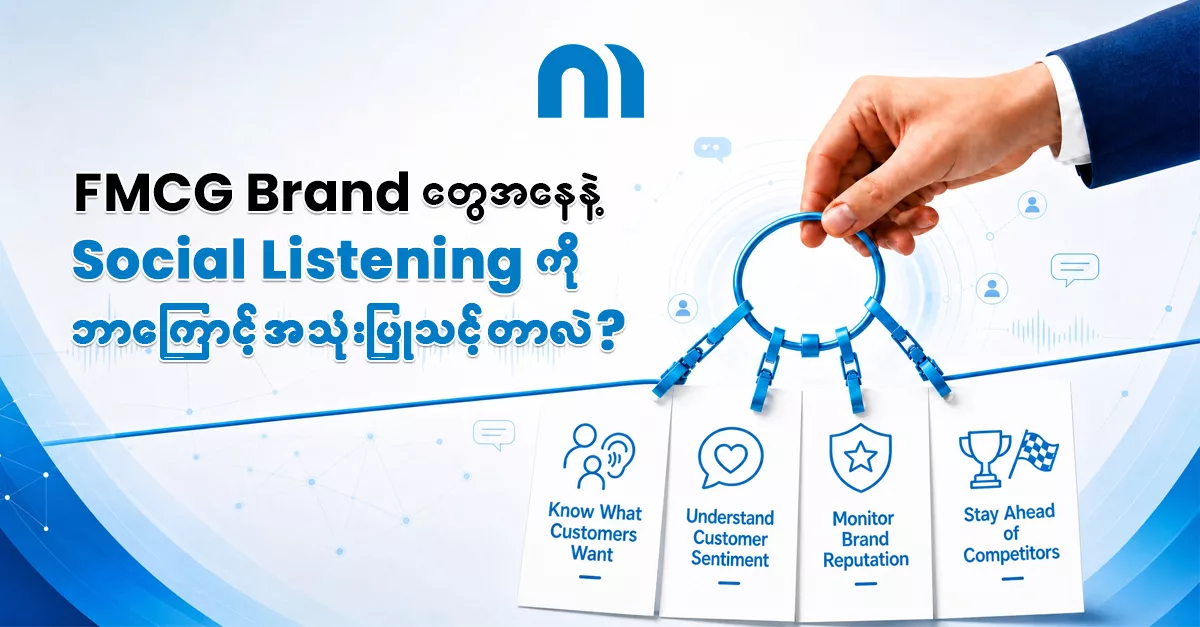
What Exactly Makes an Effective Media Monitoring Tool?
In today’s digital landscape, many brands focus heavily on vanity metrics; likes, shares, and comments. However, when it comes to understanding true business growth and performance, what really matters is the “Voice of the Customer”, what people are actually saying about your brand.
Therefore, when choosing a Media Monitoring and Social Listening ecosystem that delivers real business value, it is essential to evaluate whether it offers the following core capabilities:
1. A Vigilant Real-Time Alerting System
The digital environment evolves in minutes. Brands need to know the instant their business name, competitors, or industry keywords are mentioned. A proactive alert system is especially critical for crisis management, enabling communication teams to detect risks early and respond before an issue escalates.
2. AI-Powered Sentiment Analysis
Amassing high volumes of data is one thing; understanding the emotional context behind that data is another. An effective tool must accurately categorize public perception as Positive, Negative, or Neutral. This allows brand managers to measure true customer satisfaction and mitigate negative feedback before it impacts brand reputation.
3. Robust Local Language Support
For brands operating in Myanmar, this is perhaps the most crucial requirement. A powerful tool must go beyond global languages to accurately capture local nuances, including both Unicode and Zawgyi fonts, emojis, and local colloquialisms or slang. Only then can businesses extract authentic market insights.
4. Competitor Benchmarking & Share of Voice
Monitoring your own brand performance is only half the battle. To gain a true competitive advantage, a tool must track your competitors’ content strategies, campaign performance, and overall market dominance. This comparative data is key to identifying untapped market opportunities.
5. A User-Friendly Collaboration Dashboard
Finally, an effective system requires an intuitive dashboard. It should present complex campaign dynamics and business growth data through clear, actionable insights. Furthermore, it must simplify stakeholder reporting by allowing teams to easily export comprehensive performance reports for management teams or clients at any given time.
- While these capabilities are essential, finding them seamlessly integrated into a single platform can be a challenge. That is where Magnify Myanmar’s Social Listening Tool steps in to bridge the gap for your business.
- Magnify Myanmar delivers real-time alerts, advanced AI-powered sentiment analysis, and continuous competitor tracking. More importantly, our platform features robust local language optimization, engineered specifically to comprehend the Burmese language and interpret rapidly shifting local context and trends with high precision.
- We transform raw data into actionable insights and comprehensive reports, empowering your leadership to make high-conviction, data-driven marketing decisions.
Unlocking the hidden opportunities within your data is the first step toward sustainable brand equity. Partner with Magnify Myanmar today to drive your strategic brand growth.
To learn more about our solutions, visit our website at www.magnifymyanmar.com or contact us at 09 408194400 to request a Free Trial.
Why Most Social Listening Tools Are Functionally Illiterate in Myanmar
There is an uncomfortable truth behind a lot of social listening in Myanmar, and almost nobody says it out loud.
Most of the tools doing the listening cannot actually read.
Not properly. Not the way the language is really used. A global platform will happily produce a clean dashboard full of confident charts about your Myanmar audience, and a good portion of what feeds those charts is the software politely guessing, because the language defeated it somewhere upstream. The charts still look great. That is the dangerous part.
If you are making brand decisions off that data, it is worth understanding exactly where the reading breaks down, and why this is a genuinely hard problem rather than a lazy one.
Burmese was built to break English-first software
Most of the world’s natural language processing was designed around languages like English. Words separated by spaces, a familiar alphabet, decades of training data. Burmese quietly violates almost every one of those assumptions.
There are no spaces between words. This sounds like a small thing. It is not. In English, software finds words by looking for the gaps. Burmese traditionally does not put gaps between words at all, so before a tool can analyse anything, it first has to figure out where one word even ends and the next begins. This is a famously hard problem called word segmentation, and it is the foundation everything else is built on. Get it wrong, and the meaning collapses.
Here is the easiest way to feel it. Imagine an English comment arrived with no spaces: “thefoodwasnotbadatall.” Now imagine your software splits it in the wrong place and reads “not” as belonging to a different phrase. A glowing review just became a complaint, or a complaint became praise. In Burmese, that ambiguity is not an edge case. It is every single sentence.
There were two competing ways to type the language. For years, Myanmar was split between two incompatible text encodings, Zawgyi and Unicode. The same comment could be stored in two completely different ways under the hood. A tool that only understands one of them sees the other as gibberish. Even today, older content and some users still produce text that has to be detected and converted before it can be read at all. Skip that step, and you are not analysing a chunk of your audience, you are silently dropping them.
Burmese is a low-resource language. In plain terms, the global research and training data that makes AI fluent in English, Spanish or Chinese barely exists for Burmese. Fewer datasets, fewer benchmarks, fewer pre-built tools. When researchers test large language models on lower-resource languages, performance drops off noticeably compared to the major ones. The fluency you take for granted in English simply has not been built yet for Burmese, unless someone deliberately builds it.
Now add how people actually talk online
The script is only the first hurdle. Real Myanmar social media adds a second layer that even many Burmese-aware tools stumble over.
People code-switch constantly, mixing Burmese and English inside a single sentence. They type Burmese using English letters when they cannot be bothered to switch keyboards. They lean on slang, abbreviations, and inside jokes that shift every few months. And like everyone else online, they are heavily sarcastic, and they communicate enormous amounts through emoji and stickers that carry meaning a keyword search will never catch.
A keyword tool counts the word. It has no idea the word was being used to mock you.
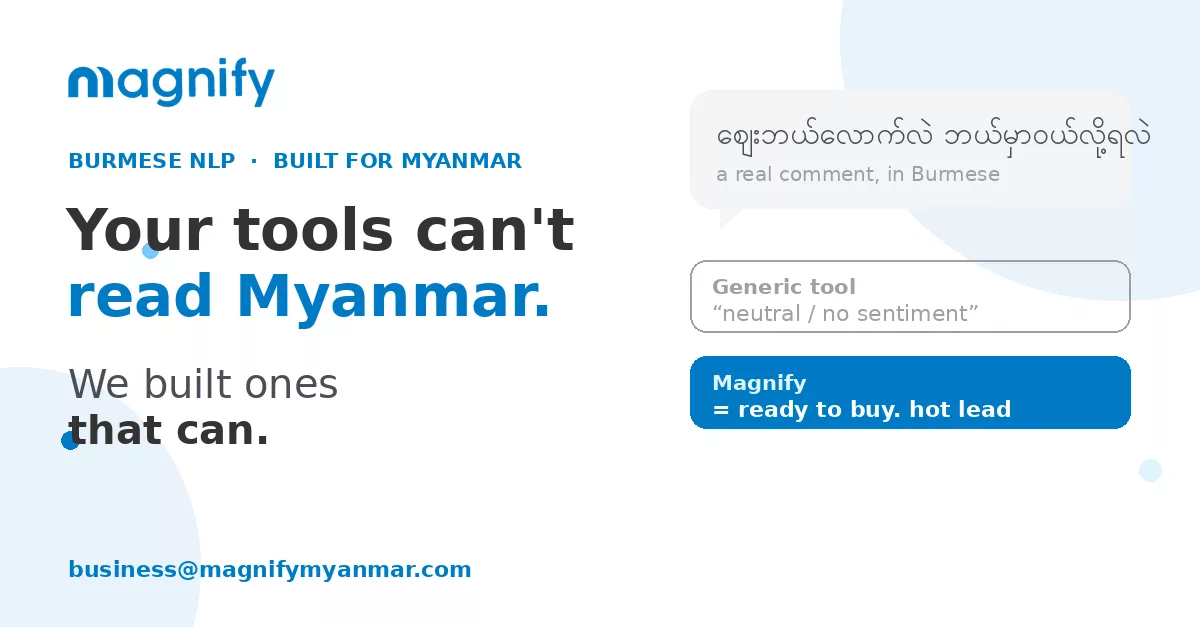
So when an off-the-shelf international platform processes Myanmar comments, the most common failure is not a dramatic error. It is something quieter and worse: it shrugs. Unsure how to classify text it cannot fully parse, it defaults huge volumes of comments to “neutral.” Your dashboard then tells you sentiment is calm and balanced, when in reality you are looking at a wall of enthusiasm, or a slow-building complaint, that the software simply could not hear.
Neutral is not always neutral. Sometimes neutral just means “I gave up reading this.”
What changes when the tool can actually read
This is the gap we built Magnify to close, and it is the difference between counting Myanmar and understanding it.
Reading the language properly means handling Burmese the way Burmese is actually written and typed: segmenting words correctly, normalising the encoding mess before analysis rather than after, and recognising mixed Burmese-English, romanised Burmese, slang and sarcasm as real signal instead of noise. That is the unglamorous foundation, and most tools never lay it.
Layering modern language models on top of that foundation is what turns reading into comprehension. Done right for this market, it means a model can tell the difference between a genuine compliment and a sarcastic one. It can recognise that a short, simple question like “how much, and where can I buy it” is not neutral chatter, it is a customer with their wallet open. It can group thousands of differently worded complaints into the handful of real issues underneath them. It can read the emoji as part of the sentence, not as decoration to be stripped out.
The practical payoff is not abstract:
- Sentiment you can trust, because the comments were actually read rather than rounded to neutral.
- Buying signals you would otherwise miss, surfaced as leads instead of buried in a volume count.
- Early warning on trust and quality issues, caught while they are still a handful of comments rather than a crisis.
- A view of your whole audience, including the ones writing in Zawgyi, in slang, or in half-English, who other tools quietly discard.
That last point matters more than it looks. Every comment a tool cannot read is a customer it has decided does not count. In a market this digital and this expressive, that is an expensive blind spot to leave running.
The bottom line
A dashboard is only as honest as the reading underneath it. In Myanmar, the reading is the entire game, and it is precisely where generic, English-first tooling falls quietly short. The language does not bend to fit the software, so the software has to be built to fit the language.
That is the work we do. We built our social listening for Myanmar specifically, on Burmese-aware language processing and models tuned for how this market actually talks, so that the insight you act on is based on what your customers truly said, not on a confident guess about text the tool could not parse.
If you have ever looked at a suspiciously calm “neutral” sentiment score for your Myanmar campaigns and wondered what it was really hiding, that instinct is worth following.
Let’s find out what your audience is actually saying. Reach our team at business@magnifymyanmar.com and we will show you the difference between counting Myanmar and understanding it.
Magnify Myanmar — Social Listening & Market Intelligence, built for Myanmar.